




Sibelius-lukio – Music, Dance and Everyday Life in a Helsinki Upper Secondary School
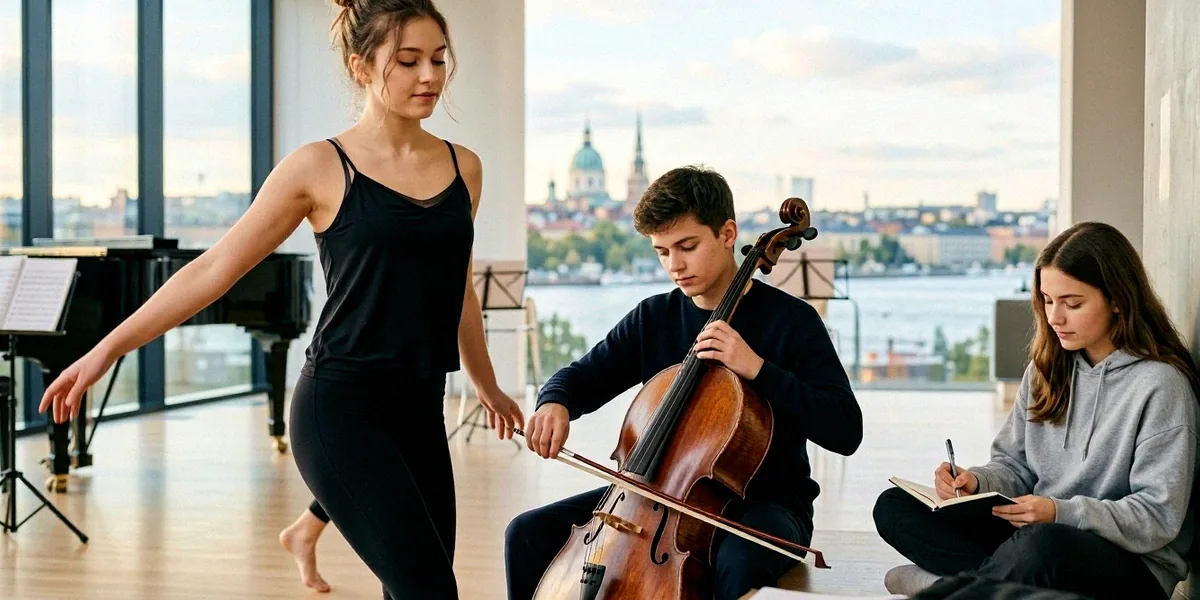
It is 8:15 on a grey Helsinki morning, and the corridors of Sibelius-lukio are already alive with sound. A cellist squeezes past two ballet students warming up against the lockers, someone hums a scale while lacing up dance shoes, and a violin case thuds gently against a rucksack. Somewhere upstairs, a piano is being tuned. This is what an ordinary Tuesday looks like at one of Finland’s most distinctive upper secondary schools – and honestly, we wouldn’t have it any other way.
What Makes Sibelius-lukio a Unique Music Upper Secondary School?
Sibelius-lukio is a specialised musiikkilukio – a music-focused upper secondary school – in the heart of Helsinki, and one of the few institutions in Finland where music and dance sit side by side as core subjects rather than extracurricular extras. If you are reading this from the UK, the closest comparisons we can draw are specialist arts schools such as Chetham’s School of Music in Manchester or Tring Park School for the Performing Arts in Hertfordshire. Like those schools, we combine intensive artistic training with a full academic programme – but with a distinctly Finnish twist: no fees, no auditions at age eight, and a strong emphasis on students shaping their own creative path.
A brief history of Sibelius-lukio
Our school takes its name from Jean Sibelius, Finland’s most celebrated composer, and has grown over the decades into a national hub for young musicians and dancers. Generations of alumni have gone on to Finnish orchestras, dance companies and international conservatoires, and the school’s reputation rests on a simple idea: artistic excellence and academic ambition belong together.
Music and dance as core subjects
At a typical Finnish lukio, students follow a broad national curriculum. At Sibelius-lukio, music or dance becomes a major subject alongside mathematics, languages and sciences. Musicians study instrument or voice, music theory, ear training and ensemble playing; dancers follow the tanssilinja with daily technique classes. Everyone still prepares for the same national exams as their peers elsewhere – they simply do it with a cello or a pair of pointe shoes in the corner.
How our timetable balances arts and academics
Our timetable is built around periods rather than fixed weekly slots, which gives students real flexibility. A typical week might include:
- Instrument or voice lessons and ensemble rehearsals
- Daily dance technique classes for tanssilinja students
- Academic courses in Finnish, English, mathematics and sciences
- Music theory, history and ear training
- Choreography or composition workshops
This structure means a student can spend three hours in the dance studio in the morning and still be deep in a physics problem set by the afternoon.
Inside the Tanssilinja: Dance Training and Creative Growth
The tanssilinja – our dance line – is one of the reasons students travel from across Finland to study here. It is a full upper secondary programme in dance, not a hobby club, and it attracts young dancers who want serious training without giving up their academic education.
Daily dance classes and technique
Dancers begin most mornings with technique class, rotating through contemporary dance, ballet, jazz and improvisation across the year. Teachers emphasise healthy technique and injury prevention, and class sizes stay small enough that everyone receives individual corrections. By the time students reach their final year, many are performing at a level that would feel familiar to anyone who has visited Tring Park School for the Performing Arts.
Choreography projects and showcases
Every year, tanssilinja students create their own choreography, working in small groups or solo, and present it in internal showcases. These projects are assessed as part of the dance programme, but more importantly they teach students to develop a creative voice of their own – something we believe matters as much as perfect technique.
Collaborations with Helsinki dance companies
We are lucky to sit in a city with a vibrant dance scene. Students have worked with visiting choreographers and attended performances at venues including the Finnish National Opera, where our dancers have also had the chance to perform in larger productions. Seeing your classmates on a professional stage is a powerful motivator for everyone in the studio.
Lukiodiplomi and Musiikkilukio: Pathways to Further Study
For students aiming at professional training, the lukiodiplomi – the Finnish upper secondary diploma in the arts – is a central milestone. It is a nationally recognised qualification that allows students to demonstrate advanced skill in music or dance alongside their standard lukio studies.
What the lukiodiplomi involves
The lukiodiplomi combines a written reflection, a portfolio of work, and a final assessed performance or project. For musicians, that might mean a recital programme plus analysis of the repertoire; for dancers, a choreographed piece with supporting documentation. Assessment is carried out by external examiners, which keeps standards consistent across Finland.
Preparing a portfolio and final performance
Preparation usually begins in the second year and intensifies in the final year. Students work closely with their subject teachers, and the process mirrors what UK applicants face when auditioning for institutions such as the Royal Academy of Music or the Guildhall School of Music & Drama: choose repertoire that shows range, rehearse relentlessly, and be ready to talk intelligently about your choices.
Recognition by Finnish and international institutions
The lukiodiplomi is well understood by Finnish universities and conservatoires, and increasingly recognised abroad. Our alumni have successfully applied to music and dance programmes across Europe, including UK conservatoires, often using the diploma as evidence of sustained, high-level artistic training.
Ylioppilaskirjoitukset and Everyday Student Life
Alongside all the music and dance, every student at Sibelius-lukio prepares for the ylioppilaskirjoitukset – the Finnish matriculation examinations. They are the academic backbone of the Finnish lukio system and the main route to university admission.
Exam structure and subject choices
Students must complete at least four subjects, with Finnish (or Swedish), a second national language, a foreign language and mathematics or a general studies paper typically at the core. Beyond that, candidates can choose from a wide range of subjects, and many of our students sit exams in music or dance-related subjects alongside traditional academic ones.
Study tips from our team
Balancing rehearsals with revision is a skill in itself. Our team’s advice, distilled from years of watching students juggle both:
- Block your week: schedule practice sessions and revision slots in the same calendar.
- Use short, focused study bursts of 25–40 minutes rather than marathon sessions.
- Review past exam papers early – the format matters as much as the content.
- Protect your sleep, especially during performance weeks.
- Ask for help early; teachers here genuinely want you to succeed.
Wellbeing and time management
Exam stress is real, and so is rehearsal fatigue. We encourage students to talk openly about both, and the school offers student welfare support, tutor check-ins and a culture where taking a break is not seen as weakness. Our favourite reset is a short walk to one of the cafés near the school in Helsinki – a coffee, a cinnamon bun and twenty minutes away from the practice room can do wonders for perspective.
Why We Love Our Helsinki Upper Secondary School
Ask anyone on our team what makes Sibelius-lukio special and you will get a similar answer: the people. It is a community where a violinist and a contemporary dancer can collaborate on a project, where academic teachers cheer on students at evening concerts, and where the corridors genuinely feel like a creative neighbourhood.
A day in the life of a student
Mornings start with technique or instrument practice, mid-morning brings academic lessons, afternoons are for ensembles or choreography, and evenings often mean a concert, a rehearsal or a well-earned rest. It is busy, but it is also joyful – and the annual spring gala, where the whole school performs together, is the highlight of our calendar.
Alumni stories and career paths
Our former students have become orchestral musicians, freelance dancers, composers, music teachers and even doctors who still play in chamber groups at weekends. What they share is the ability to work hard at something they love – a skill this school quietly teaches every single day.
Applying as an international student
Students from the UK and elsewhere can apply to Sibelius-lukio through the Finnish joint application system, usually with an aptitude test in music or dance. If you are curious about a Finnish exchange or a full upper secondary place, we recommend getting in touch early, brushing up on Finnish, and preparing a short audition programme that shows who you are.
FAQ
Do I need to speak Finnish to study at Sibelius-lukio?
Most teaching is in Finnish, so a working knowledge of the language is important. Some courses and international cooperation projects use English, and exchange students often receive additional language support.
Is the tanssilinja only for students who want to become professional dancers?
No. Many of our dance students go on to university studies in other fields. The tanssilinja builds technique, discipline and creativity that transfer to almost any career.
How does the lukiodiplomi compare to UK qualifications?
It is a national arts diploma rather than a direct equivalent to A-levels, but conservatoires such as the Royal Academy of Music and the Guildhall School of Music & Drama recognise it as evidence of serious pre-professional training.
Can international students perform at the Finnish National Opera?
Opportunities vary year by year, but our dance and music students have taken part in productions and projects connected to the Finnish National Opera, and international students are included when places allow.
When should I start preparing my application?
We recommend beginning at least a year in advance – researching the aptitude test, preparing repertoire, and improving your Finnish. Early preparation makes the whole process far less stressful.
Sibelius-lukio is more than a school. It is a creative community where music, dance and academic ambition thrive together in Helsinki – and if that sounds like your kind of place, we would love to hear from you. Get in touch with our team, follow the student blog for more insights, and start planning your own chapter in this remarkable school.
Uusimmat artikkelit
- Ylioppilaskirjoituksiin valmistautuminen: lukusuunnitelma, joka oikeasti toimii
 Ylioppilaskirjoituksiin valmistautuminen: A Study Plan That Actually Works We will admit something upfront: most exam study plans collapse within a fortnight. They… Lue lisää: Ylioppilaskirjoituksiin valmistautuminen: lukusuunnitelma, joka oikeasti toimii
- Tanssilinjan arki: harjoitussalista lavalle
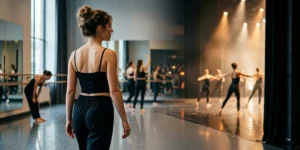 Tanssilinjan arki: From Rehearsal Studio to the Stage It is 7:45 on a grey Helsinki morning, and the studio is already awake.… Lue lisää: Tanssilinjan arki: harjoitussalista lavalle
- Opiskelijavaihto ja opintomatkat ulkomaille lukiossa
 Student Exchange and Study Trips Abroad: Our Experience at Sibelius-lukio The coach pulls up outside a school in Oslo and thirty teenagers… Lue lisää: Opiskelijavaihto ja opintomatkat ulkomaille lukiossa
- Opiskelijahuolto lukiossa: kenelle voit puhua ja milloin
 Opiskelijahuolto lukiossa: kenelle voit puhua ja milloin It is 7:45 on a grey Tuesday in Helsinki. You have a dance rehearsal at… Lue lisää: Opiskelijahuolto lukiossa: kenelle voit puhua ja milloin
- Musiikkiteknologian valinta lukiossa: mit? kurssilla opitaan
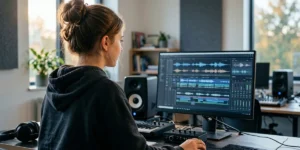 Musiikkiteknologian valinta lukiossa: what we actually learn on the course It is a grey Tuesday in November, and a first-year student is… Lue lisää: Musiikkiteknologian valinta lukiossa: mit? kurssilla opitaan
- Musiikin lukiodiplomi: n?in valmistaudut esiintymiseen
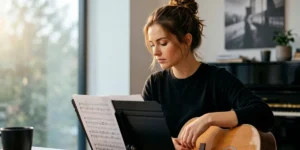 Musiikin lukiodiplomi: How We Prepare for the Performance Exam There is a particular feeling that arrives when a student decides to take… Lue lisää: Musiikin lukiodiplomi: n?in valmistaudut esiintymiseen