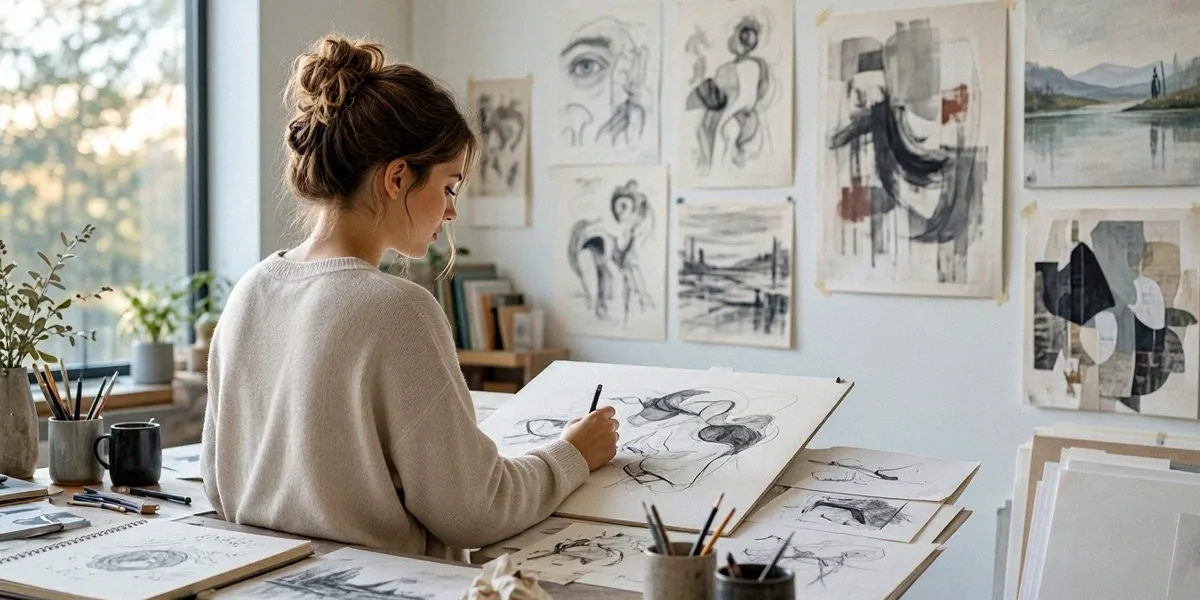
Kuvataiteen lukiodiplomi: From First Idea to Final Exhibition
The spring show is always the moment everything clicks. Last April, we stood in the corridor gallery at Sibelius-lukio as a student adjusted the angle of a single spotlight on a three-metre canvas — a painting built from months of charcoal studies, failed colour experiments and one stubborn idea that refused to let go. Parents drifted in from the rain, dance students rehearsed in the hall next door, and the whole building smelled faintly of fixative and coffee. So what actually goes into a kuvataiteen lukiodiplomi? Quite a lot more than the finished piece on the wall.
What Is a Kuvataiteen Lukiodiplomi — and Why Does It Matter?
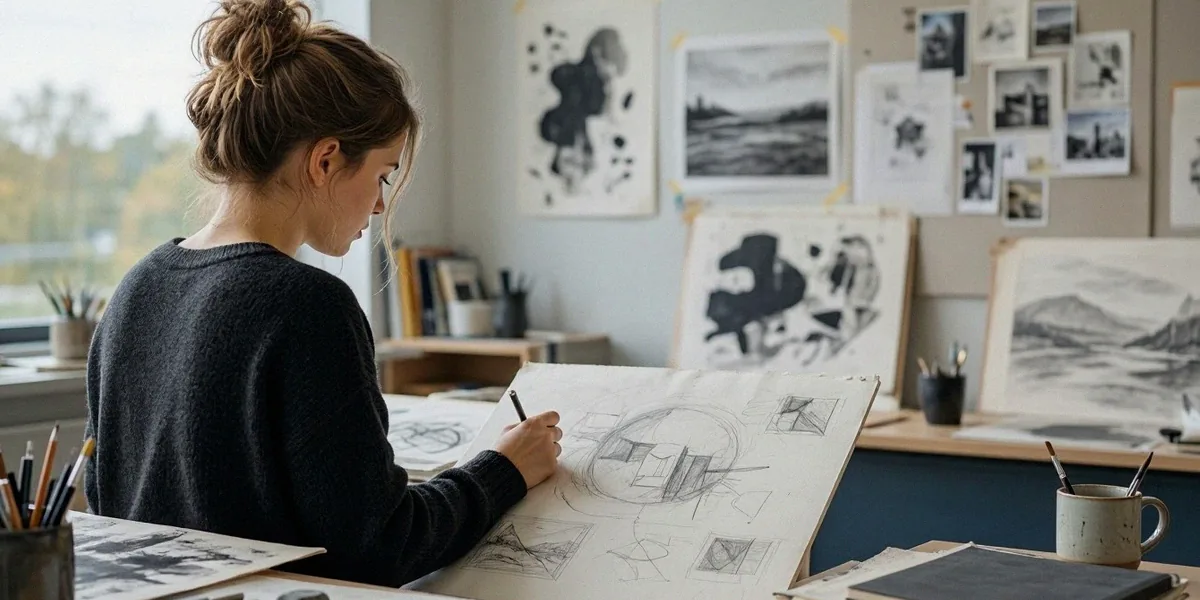
The kuvataiteen lukiodiplomi is a national optional diploma in visual arts for Finnish upper secondary students, completed alongside the standard syllabus and assessed by external examiners. It is not a single exam or a single artwork; it is a full creative project with research, process documentation, a finished body of work and reflective writing. At Sibelius-lukio, it sits alongside our other arts-based diplomas and runs in parallel with the ylioppilaskirjoitukset, the Finnish matriculation examinations. Students often complete the diploma during their second and third years, which means careful planning around exam revision periods.
How It Differs from Other Lukiodiplomit
Finland offers lukiodiplomit in several art forms, and the differences are practical as well as artistic. The music diploma centres on performance and composition, the dance diploma on choreography and stage work, while the visual arts diploma is built around a sustained studio practice. The assessment weights process and reflection heavily, not just the final object. That distinction matters: a student who paints brilliantly but cannot explain their decisions will struggle, and a student with a modest final piece but a rigorous process can score well.
Who Should Consider It at Sibelius-lukio
We recommend the visual arts diploma to students who already keep sketchbooks for pleasure, who want a portfolio for art school applications, or who simply want one part of their studies to be entirely self-directed. It suits painters, photographers, printmakers, sculptors and students working in digital or mixed media. Our musiikkilukio and tanssilinja students sometimes take it too, particularly when their practice crosses into visual work such as stage design or costume.
Finding Your Idea: Inspiration from Helsinki and Beyond
Every diploma begins with a proposal. Students draft a topic, a research question and a rough plan, then present it to a supervising teacher for approval. The idea must connect to the student’s broader artistic growth, not just be a nice picture. Helsinki does much of the work here. A student might spend an afternoon at Helsinki’s Ateneum Art Museum studying Finnish Golden Age painting, then walk twenty minutes to Kiasma and come back with a completely different set of questions about space and installation. Others draw on family history, migration, the Baltic light in November, or the sound of the metro at rush hour.
Brainstorming Techniques We Use in Class
We run a few structured exercises early in the process:
- Twenty-minute free writing on the question ”what do I keep coming back to?”
- Mind maps that link a personal theme to at least three artists or movements
- Gallery visits with a single prompt, such as ”find one work that makes you uncomfortable”
- Peer pitching, where each student explains their idea in ninety seconds and takes questions
Balancing Personal Voice with Academic Requirements
The Finnish national core curriculum for the lukiodiplomi requires students to demonstrate artistic thinking, not just technical skill. In practice, this means a personal topic must be framed as an artistic investigation. ”My grandmother’s kitchen” becomes ”how domestic objects carry memory: material studies in clay and found textiles.” We help students find that framing without flattening what made the idea personal in the first place.
The Creative Process: From Sketch to Finished Work
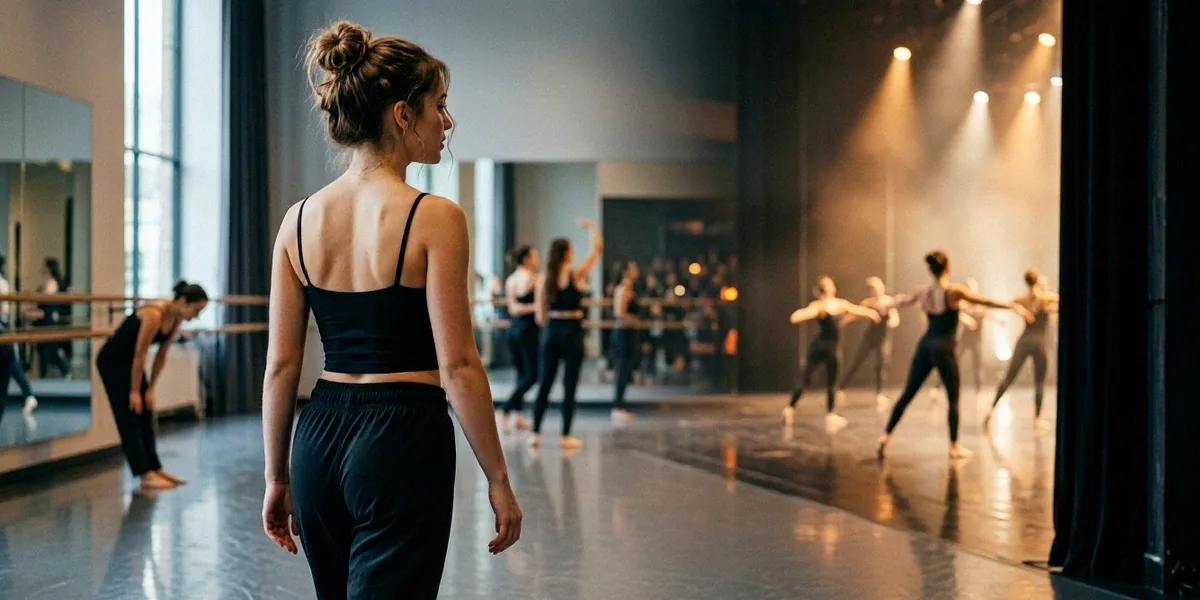
Once the proposal is approved, the real work starts. Students move through research, sketching, material exploration and regular feedback sessions, usually meeting their supervisor every two to three weeks. The school’s art studio is open for independent work, and we encourage students to book longer blocks rather than snatching an hour between lessons. Some of our strongest projects have come from collaborations with the tanssilinja, where a dancer and a visual artist develop a piece together — a painted backdrop for a solo, or a movement score translated into a series of drawings.
Research and Mood Boards
Research can be anything from art history reading to interviews, site visits or archival photographs. Mood boards are not decoration; they are working documents. We ask students to annotate theirs with notes on colour, composition, texture and the specific decisions they are testing.
Material Choices and Technical Skills
Material exploration is where many students surprise themselves. Someone who planned an oil painting may end up working in rusted metal after a single workshop. We push students to justify their material choices in writing, because examiners look for a clear relationship between concept and medium.
Documenting the Process for Assessment
Documentation is continuous, not retrospective. Students photograph their workspace, keep dated sketchbook pages, and write short weekly entries. This record becomes the backbone of the final portfolio and makes the reflective essay far easier to write in January.
Preparing the Exhibition: Curation, Space, and Audience
The finished works are exhibited at Sibelius-lukio’s annual spring show, and in recent years we have also partnered with small local galleries in Helsinki to give students a second venue. Curation is part of the learning: students decide sequence, spacing, lighting and wall text. The exhibition is open to the public and has been covered by local media, which adds a genuine sense of occasion. Families, teachers and friends are invited, and the opening night usually includes short artist talks.
Designing the Exhibition Layout
We treat the layout as a group problem. Students walk the space with masking tape, test sightlines, and negotiate which works sit near windows and which need controlled light. It teaches compromise as much as design.
Writing Artist Statements in English and Finnish
Every student writes an artist statement in both Finnish and English. The English version is not a translation exercise; it is a chance to reach international visitors and, for many, a first taste of writing about their practice for a portfolio. We review drafts together and cut anything that sounds like a press release.
Assessment and Reflection: How the Diploma Is Graded
Assessment rests on three pillars: artistic quality, process documentation and reflective writing. External examiners grade the diploma, and the completed work counts toward the ylioppilaskirjoitukset portfolio, which is increasingly relevant for students applying to art schools in Finland and abroad. The written reflection often carries more weight than students expect at the start.
The Role of Self-Reflection
One of our recent graduates put it plainly: ”I thought the painting was the point. It turned out the thinking around the painting was the point — and that is the part I still use.” That shift in perspective is common, and it is exactly what the diploma is designed to produce.
Tips for a Strong Final Portfolio
- Include failures and dead ends, clearly annotated.
- Show at least three distinct material experiments.
- Keep dates visible so the examiner can trace your development.
- Write your reflection in your own voice, then edit for clarity.
- Proofread the English statement — ask a teacher if you are unsure.
Why This Matters for UK Students and Educators
There are clear parallels with UK qualifications. A-level Art and Design and BTEC Art and Design Practice both emphasise personal investigation and sustained project work, and both feed into UCAS portfolio requirements. The Finnish model differs in one notable way: the lukiodiplomi is explicitly cross-arts. A visual arts student may collaborate with dancers or musicians, and the assessment rewards that collaboration. We follow what UK schools are doing — many of us have visited Tate Modern and swapped notes on portfolio preparation — and we think there is plenty to learn in both directions.
Lessons from the Finnish Approach
Two things stand out. First, process documentation is treated as assessable work in its own right, which forces students to think like artists rather than technicians. Second, cross-arts collaboration is normal rather than exceptional, which builds the flexibility that creative industries increasingly demand.
How to Stay Connected with Sibelius-lukio
We welcome exchange ideas, guest critiques and questions from UK teachers and students. Follow this blog for updates on our exhibitions, diploma projects and student life in Helsinki, and get in touch if you would like to compare approaches.
FAQ
Is the kuvataiteen lukiodiplomi compulsory for Finnish upper secondary students?
No. It is an optional national diploma. Students choose it alongside their regular studies and the ylioppilaskirjoitukset, and at Sibelius-lukio it is one of several arts diplomas available.
How long does the diploma take to complete?
Most students spread the work across roughly a year, often starting in the second year and finishing before the matriculation exams. Weekly studio time plus independent work is typical.
Can international or exchange students take the diploma?
In many cases, yes, provided they are enrolled and can complete the required documentation and exhibition. We advise discussing timing with the supervising teacher early.
Does the diploma help with UK university applications?
It can. The portfolio and reflective writing map well onto UCAS portfolio requirements for courses such as A-level Art and Design progression routes or BTEC-based degrees, and the cross-arts element is a strong talking point in interviews.
Where can I see student work from previous years?
Our annual spring exhibition at Sibelius-lukio is open to the public, and selected works and documentation are shared on this blog throughout the year.
The kuvataiteen lukiodiplomi is not just a qualification. It is a year of learning how to think, document, defend and exhibit your own work — a genuinely transformative creative journey that shapes how students approach everything afterwards. Follow our blog for more insights into Finnish arts education, and if you are a UK student or educator curious about how we do things in Helsinki, we would love to hear from you.



Post Comment