Experimental Physics at Sibelius-lukio: A Student Guide to Lab Work
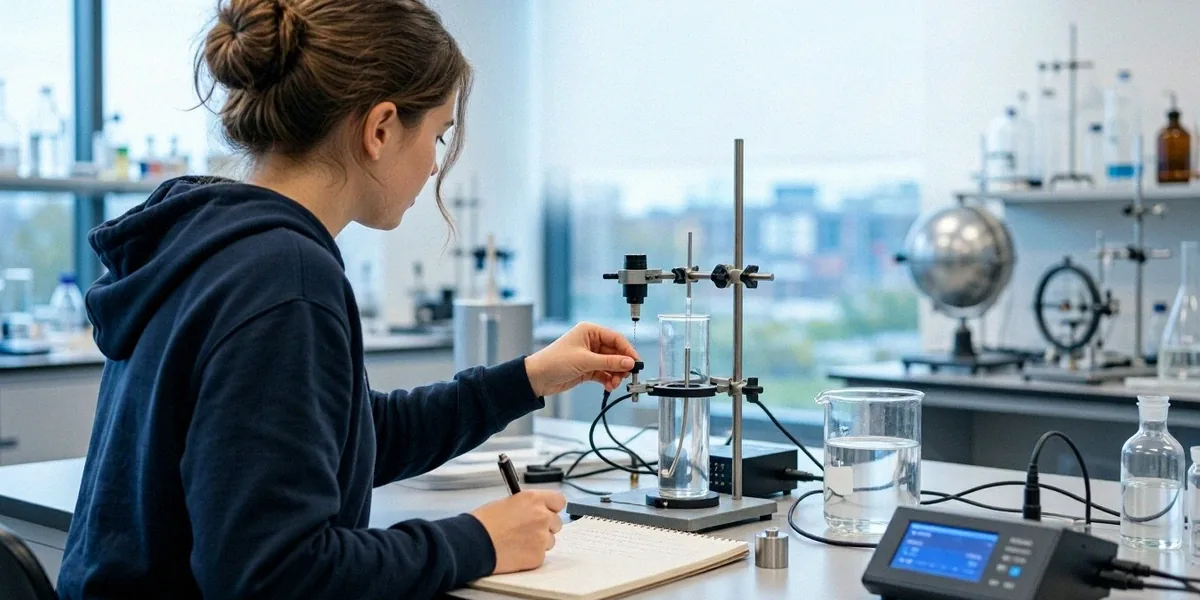
You walk into the physics lab at Sibelius-lukio for the first time, violin case still in hand, and you are not entirely sure what to expect. Maybe you picture rows of dusty apparatus and complicated formulas that have nothing to do with your morning ballet class. Then a classmate switches on a signal generator, a loudspeaker hums, and suddenly you realise this room is full of questions you have already been asking on stage and in the studio. That first lab session sets the tone for everything that follows: physics here is hands-on, noisy, curious, and surprisingly close to the arts you care about.
Why Experimental Physics Matters at Sibelius-lukio
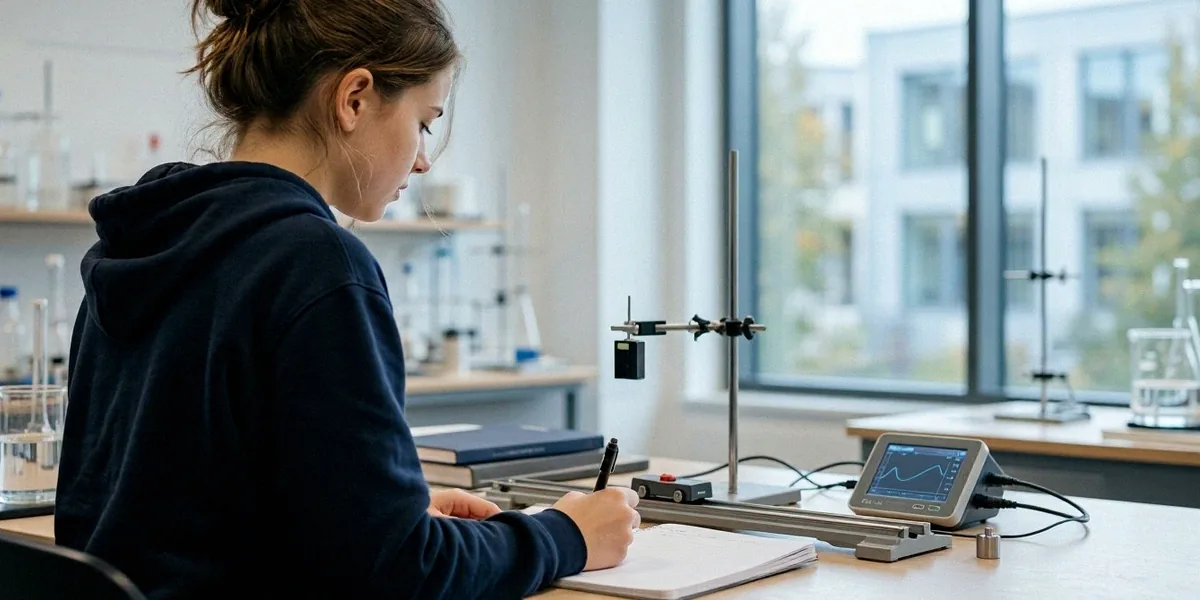
At our school, physics is not a subject you simply read about. The Finnish national core curriculum requires hands-on laboratory work for every upper secondary student, including those on tanssilinja, so everyone spends time measuring, testing, and building arguments from real data. For musicians and dancers, that practical work sharpens the same habits you already use in rehearsal: listening closely, adjusting in real time, and learning from mistakes.
How Lab Work Supports Musiikkilukio and Tanssilinja Students
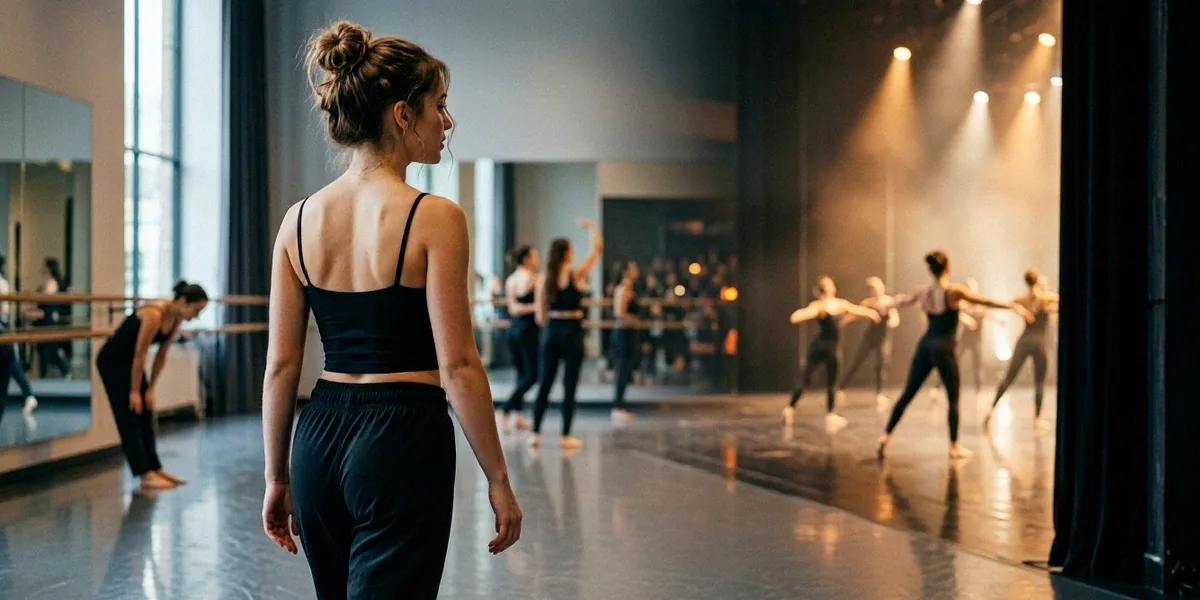
If you are on the musiikkilukio track, acoustics is an obvious bridge. You can measure how string tension changes pitch, or how the shape of a hall affects resonance. Dancers on tanssilinja often explore motion, balance, and forces — the same physics that explains why a pirouette works or why a jump lands the way it does. We have seen students use lab data to improve their own performance technique, which is exactly the kind of cross-over that makes studying here distinctive.
What the Finnish National Core Curriculum Requires
The national curriculum sets out compulsory physics modules with a strong experimental component. That means every student, regardless of specialism, completes practical investigations, learns to handle measurement uncertainty, and writes structured reports. In practice, this guarantees that a dancer or a cellist leaves Sibelius-lukio with genuine scientific literacy, not just a passing grade.
Getting Started: Your First Weeks in the Physics Lab
The first weeks are deliberately gentle. Teachers introduce safety routines, show you where everything lives, and give you small tasks that build confidence before anything complex begins. If you have seen the Institute of Physics (IOP) practical guides used in UK schools, the approach will feel familiar: clear instructions, an emphasis on technique, and plenty of room to ask questions.
Lab Safety and Equipment Essentials
Safety comes first, and it is not negotiable. Before you touch anything, you learn the basics:
- Where the eyewash station, fire blanket, and first-aid kit are located
- How to handle glassware, heat sources, and electrical equipment safely
- Why loose sleeves, long hair, and open flames do not mix
- How to report a spill or breakage immediately
From there, you get hands-on with the equipment: multimeters, oscilloscopes, motion sensors, signal generators, and data-logging software. Our teachers demonstrate each tool before you use it, and you practise until the setup feels routine rather than intimidating.
Understanding Measurement and Uncertainty
One of the first genuinely new ideas is measurement uncertainty. Every reading has a limit to its precision, and learning to state that honestly is a core scientific skill. We practise repeating measurements, calculating averages, and expressing results with appropriate significant figures. This is the same discipline emphasised in UK A-level practical endorsement, where accuracy and integrity in data handling are formally assessed.
How to Keep a Lab Notebook That Actually Helps
A good notebook is not a tidy copy of the instructions — it is a working record. We encourage students to date every entry, sketch the apparatus, note what actually happened (including the surprises), and record raw data before any calculations. When exam season arrives, that notebook becomes your best revision tool, because it captures your own reasoning rather than someone else’s summary.
Designing and Running Your Own Experiments
Once the basics are solid, you move into open-ended investigations. This is where physics starts to feel like your own project. Sibelius-lukio actively encourages cross-disciplinary work linking physics with music acoustics or dance motion, in the same spirit as STEM enrichment at UK schools, where students apply science to real, self-chosen problems.
From Hypothesis to Method: Planning Your Investigation
A strong investigation starts with a clear, testable question. We ask students to:
- State a hypothesis and explain the reasoning behind it
- Identify the independent, dependent, and control variables
- Choose equipment that matches the precision you need
- Plan repeat measurements to reduce random error
- Think about safety and ethics before you begin
Teachers review your plan before you start, which saves a lot of wasted lab time later.
Collecting Data Without Losing Your Mind
Data collection is where patience matters. We recommend recording everything in a table as you go, labelling units clearly, and pausing to check for obvious anomalies before you pack up. If a reading looks strange, repeat it immediately rather than hoping it sorts itself out in analysis. Trust us — future you will be grateful.
Cross-Disciplinary Ideas: Acoustics and Motion
Some of our favourite student projects sit between subjects. Examples include measuring the resonant frequencies of different instruments, analysing the decay of a piano note, tracking the centre of mass during a dance leap, or investigating how floor surface affects jump height. These projects satisfy the physics curriculum while staying genuinely connected to your artistic training.
Writing Lab Reports That Meet Finnish Standards
Writing is where many students initially struggle, because a lab report is not an essay and not a diary. It is a structured argument supported by evidence. Clear scientific writing is assessed in ylioppilaskirjoitukset, so the habits you build now pay off directly in the national exams.
Structure of a Strong Lab Report
A typical report at Sibelius-lukio follows a consistent structure:
- Aim: what you set out to find
- Theory: the relevant physics and formulas
- Method: what you did, precisely enough to repeat it
- Results: tables, graphs, and calculated values
- Analysis: what the data shows, including uncertainty
- Evaluation: sources of error and improvements
This mirrors the expectations of UK A-level practical endorsement, where reports must demonstrate competence in technique, data handling, and critical evaluation.
Common Mistakes and How to Avoid Them
The usual pitfalls are predictable: mixing up units, forgetting to include uncertainty, describing results in the method section, or writing an evaluation that simply says ”human error.” We coach students to be specific — name the actual source of error, explain its direction, and suggest a concrete fix.
How Lab Work Connects to Ylioppilaskirjoitukset
The ylioppilaskirjoitukset physics exam rewards conceptual understanding and data interpretation, not memorisation alone. Students who have genuinely run experiments tend to handle graph questions and uncertainty problems far more confidently, because they have seen the theory behave in real equipment.
Lukiodiplomi in Physics: Taking Your Lab Work Further
For students who want to go deeper, lukiodiplomi offers an extended project with a final presentation. It is a chance to pursue a question you actually care about, with support from our teachers, alongside your arts specialisms.
What Is Lukiodiplomi and Who Should Consider It?
Lukiodiplomi is a voluntary diploma completed alongside your regular studies, involving independent research and a public presentation. If you enjoy open-ended investigations and want a portfolio piece for university applications, it is worth considering. British readers can think of it as roughly comparable to the Extended Project Qualification (EPQ), which many UK sixth-formers complete for similar reasons.
Choosing a Topic That Combines Physics and the Arts
The best diploma topics are personal. We have supported projects on instrument design, room acoustics, the biomechanics of dance injury prevention, and the physics of stage lighting. The key is finding a question that sustains your curiosity for months, not just weeks.
Presenting Your Diploma Project
The presentation is assessed on clarity, depth, and your ability to answer questions. We run practice sessions so you can rehearse your explanation, anticipate challenges, and speak confidently about your data. It is excellent preparation for university interviews and auditions alike.
Balancing Lab Work with Music and Dance Commitments
Let’s be honest: juggling rehearsals, performances, and physics labs takes planning. Sibelius-lukio’s schedule includes dedicated study periods, and our team helps students map out their week so nothing collapses in the busy spring term. For comparison, students on the UK’s Music and Dance Scheme (MDS) face similar pressures balancing intensive arts training with academic work.
Time Management Tips from Our Team
- Block out lab time and rehearsal time in the same weekly planner
- Write lab reports within 48 hours of collecting data, while it is fresh
- Use short gaps between lessons for calculations, not full reports
- Start diploma and project work early — never in performance week
When to Ask for Help (and Where to Find It)
If a concept is not clicking, ask early. Subject teachers, the student counsellor, and older students are all available, and we run drop-in sessions before exams. Struggling silently helps nobody, and asking a question is far faster than rereading a chapter five times.
Staying Motivated Through Busy Seasons
Motivation dips when you are tired. We remind students that physics and the arts share the same core: curiosity, practice, and refinement. A lab that goes wrong is not a failure — it is data. That mindset carries you through both a difficult concerto and a difficult graph.
FAQ
Do I need to be strong at maths to enjoy physics at Sibelius-lukio?
Basic algebra and graph skills are enough to start, and we build the rest gradually. Many arts-focused students discover they are better at quantitative thinking than they expected once the physics connects to something they care about.
Can I choose physics topics related to my instrument or dance style?
Yes. Cross-disciplinary investigations are encouraged, and teachers will help you shape an acoustics or motion project that still meets the curriculum requirements.
How is lukiodiplomi different from a normal physics course?
It is an extended, independent project with a presentation, rather than a taught module. You choose the question, conduct the research, and defend your findings — similar in spirit to the Extended Project Qualification (EPQ) in the UK.
Will lab work help me in ylioppilaskirjoitukset?
Significantly. The exams test data interpretation and conceptual understanding, both of which improve when you have personally run experiments and analysed uncertain results.
How do we manage lab reports during performance season?
Plan ahead, write reports soon after data collection, and use the dedicated study periods in our timetable. If a deadline clashes with a major performance, talk to your teacher early so we can find a workable solution.
Experimental physics at Sibelius-lukio builds transferable skills, confidence, and curiosity that serve students in music, dance, and beyond. Whether you are measuring resonance in a concert hall or tracking motion across a studio floor, the habits you develop in the lab — precision, honesty, and persistence — will stay with you long after you leave Helsinki.



Post Comment