
Etäopetuksen opit: What Our Pandemic Spring Taught Us About Remote Learning
I still remember the morning of 16 March 2020. I arrived at Sibelius-lukio before seven, as usual, and stood in the corridor outside the practice rooms waiting for the first scales of the day. Nothing came. No piano, no cello, no muffled count-in from a tanssilinja rehearsal behind the double doors. The building was open, but the sound had gone. We had two days to move a specialist music and dance upper secondary school in Helsinki onto screens, and none of us — not the teachers, not the students, not the caretaker who normally complains about the noise — knew whether music and dance could survive inside a laptop.
When the Music Stopped: Our First Weeks of Remote Learning
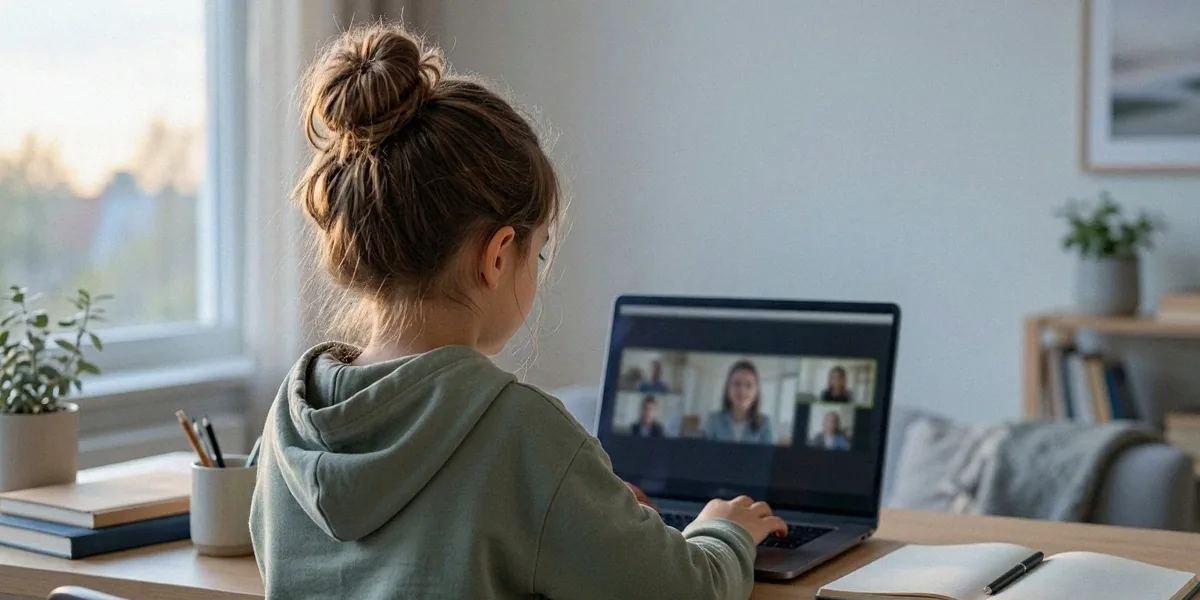
Sibelius-lukio is a specialised upper secondary school in Helsinki focused on music and dance, and our whole pedagogy rests on bodies in the same room: breath, timing, eye contact, the small nod before an ensemble entry. When Finnish schools closed in spring 2020, our musiikkilukio and tanssilinja students had to adapt overnight. The first week was chaos in the most literal sense — timetable links that didn’t work, students joining from kitchens and bedrooms, a flute lesson interrupted by a parent vacuuming downstairs.
The First Silent Practice Room
What hit us hardest wasn’t the technology. It was the silence. A practice room at Sibelius-lukio is never truly quiet; there’s always someone warming up, someone repeating the same four bars, someone laughing at a mistake. Suddenly that shared soundscape was replaced by 30 muted microphones on a Zoom grid. Our first-year students, who had chosen this school precisely because they wanted to be surrounded by other musicians and dancers, found themselves alone with their instruments for the first time.
Adapting musiikkilukio Repertoire to a Screen
Our musiikkilukio ensembles had spring concerts booked and repertoire half-learned. We couldn’t rehearse together, so we broke the music apart. Each student recorded their own part against a click track, sent the file in, and our teachers stitched the recordings together. It was slow, unglamorous work — one brass piece took eleven days to assemble — but it gave students a concrete goal at a moment when everything else had been cancelled.
How tanssilinja Dancers Kept Moving at Home
The tanssilinja students had it even harder. Dancers need floor space, mirrors, and a teacher who can see the whole body. We asked them to clear living room furniture, film themselves from a fixed angle, and work through barre and centre exercises on whatever surface they had. Some improvised with socks on parquet, some marked movements at half scale. It wasn’t a studio, but it kept them moving, and movement was what they needed most.
What Actually Worked: Tools and Tactics That Saved Our Spring
By April we had stopped panicking and started building. Three things made the biggest difference: recording projects, small-group coaching, and a stubborn commitment to keeping our community talking even when we couldn’t play together.
Recording Projects and Virtual Ensembles
We leaned on Google Classroom to distribute sheet music, click tracks, and deadlines, and students uploaded audio and video files there. For the spring showcase we assembled a virtual ensemble of 24 musicians — each one recorded separately, mixed by two of our senior students. It wasn’t a live performance, but it was theirs, and it taught them skills in recording, editing, and self-critique that a normal concert season never would have.
Breakout Rooms for One-to-One Instrumental Coaching
Zoom breakout rooms became our substitute for the corridor lesson. A teacher could drop into a room with two or three students, hear them play, correct a bowing, and move on. We also ran peer coaching sessions this way, pairing older students with younger ones — something we’d talked about for years and finally had a reason to try.
Keeping tanssilinja Technique Sharp Without a Studio
For dance, we used a mix of live Zoom classes and asynchronous video tasks. Students filmed combinations and uploaded them for written feedback. A WhatsApp group per year level became the informal studio chat — corrections, encouragement, links to professional company classes online. It wasn’t the same as a teacher’s hand adjusting your shoulder, but it kept technique from unravelling.
- Zoom — live lessons, breakout coaching, weekly year-level check-ins
- Google Classroom — assignments, sheet music, recorded feedback, deadlines
- WhatsApp — the informal layer: questions at 22:00, moral support, shared links
- Home recording setups — USB microphones, phone tripods, free DAW software
The Hard Lessons: Where Remote Learning Fell Short
We don’t want to pretend the spring was a triumph. In several areas remote learning simply failed, and pretending otherwise would be dishonest to the students who struggled.
The Latency Problem: Why We Couldn’t Play Together
You cannot play in ensemble over Zoom. The delay between Helsinki apartments — even a few dozen milliseconds — destroys any shared pulse. We tried, repeatedly, and the result was always a musical car crash. The only workable solution was asynchronous recording, which is a fundamentally different skill from playing together in real time. Our students learned to record, not to breathe together.
Preparing for ylioppilaskirjoitukset in Isolation
Our third-year students were preparing for ylioppilaskirjoitukset, the Finnish matriculation examinations taken at the end of upper secondary school, and for many of them the spring was brutal. Revision at home, without the library, without classmates quizzing each other in the canteen, without the rhythm of a school day, wore people down. We added extra tutor sessions and a weekly wellbeing check, but we were patching a hole we couldn’t fully fill.
The Missing Audience: lukiodiplomi Performances Without a Crowd
The lukiodiplomi — a Finnish upper secondary diploma often completed in music or dance — normally ends in a performance or portfolio presented to teachers, peers, and family. In spring 2020 those performances happened in empty rooms, filmed on phones. The work was still assessed, but the moment of sharing it was gone. Several students told us afterwards that performing to a camera felt like rehearsing, not performing. The audience is not decoration; it’s part of the art form.
What We’d Keep: Hybrid Habits for the Future
When we returned to normal teaching, we deliberately kept several practices from the pandemic spring. They’ve made us more flexible, and they now support both musiikkilukio and tanssilinja students year-round.
Digital Portfolios for lukiodiplomi
Every lukiodiplomi student now maintains a digital portfolio: recordings, choreographic notes, reflections, drafts. It documents process, not just final product, and it means a student who is injured or ill can still show their development. Teachers can review work as it grows rather than only at the end.
Asynchronous Feedback That Respects Student Schedules
Recorded video feedback — a teacher watching a student’s upload and responding with timestamped comments — has become standard. Students can absorb corrections at their own pace, rewatch them before a lesson, and keep them as reference. It respects the reality that our students juggle orchestras, dance companies, and academic subjects.
Hybrid Rehearsals: When to Meet and When to Record
We now use a simple rule: meet in person when the work depends on timing, breath, or physical contact; record asynchronously when the work depends on individual preparation. Sectional rehearsals for a difficult passage can happen live; learning notes can happen at home. This has freed up studio time for the things only a room full of people can do.
Advice for Other Music and Dance Schools
If your specialist school is planning for remote or hybrid teaching, here’s what we’d tell you, based on two years of trial and error at Sibelius-lukio.
Invest in Audio Gear, Not Just Webcams
A good USB microphone and a pair of closed-back headphones will improve a remote music lesson far more than a 4K camera. Dance teachers need a stable wide-angle setup and reliable upload speeds more than they need studio lighting. Budget for this the way you’d budget for instruments.
Build Check-Ins Into Every Remote Day
Start every remote session with five minutes of open conversation, and make sure every student is personally contacted at least once a week by a named adult. Isolation damages motivation long before it damages technique. Our tutors found that a two-minute phone call often did more than an hour of online instruction.
Keep the Door Open for Spontaneous Music-Making
Leave one channel — a Discord server, a WhatsApp group, a Friday open Zoom room — where students can play together with no assessment attached. The unplanned jam in a corridor is part of why students chose a music and dance school. Protect it, even in a reduced form.
Usein kysytyt kysymykset (FAQ)
What is Sibelius-lukio?
Sibelius-lukio is a specialised upper secondary school in Helsinki focused on music and dance. Students follow either a musiikkilukio track or a tanssilinja, combining specialist arts training with the standard Finnish upper secondary curriculum.
What is lukiodiplomi and how does it work at Sibelius-lukio?
Lukiodiplomi is a Finnish upper secondary diploma often completed in music or dance. At Sibelius-lukio, students build a portfolio and a final performance or presentation, which is assessed alongside their other upper secondary studies.
How did remote learning affect students preparing for ylioppilaskirjoitukset?
It made revision harder. Without the structure of a school day and the support of classmates, many students struggled with motivation and focus. We responded with extra tutoring and weekly wellbeing check-ins, but we’re honest that isolation left a mark.
Can ensemble music really be taught online?
Not in real time — latency over Zoom makes shared playing impossible. What works is asynchronous recording: each student records their part separately, and the parts are assembled afterwards. It’s a different skill from live ensemble playing, but a valuable one.
Which remote practices has Sibelius-lukio kept?
Digital portfolios for lukiodiplomi, recorded video feedback, and hybrid rehearsal scheduling. We meet in person when timing and physical presence matter, and work asynchronously when individual preparation is what’s needed.
Remote learning will never replace the shared breath of a choir or the thud of dancers landing together on a studio floor. But the pandemic spring taught our Sibelius-lukio community to be more flexible, more empathetic, and more creative about what ”together” can mean — and those lessons are still shaping how we teach today.



Post Comment