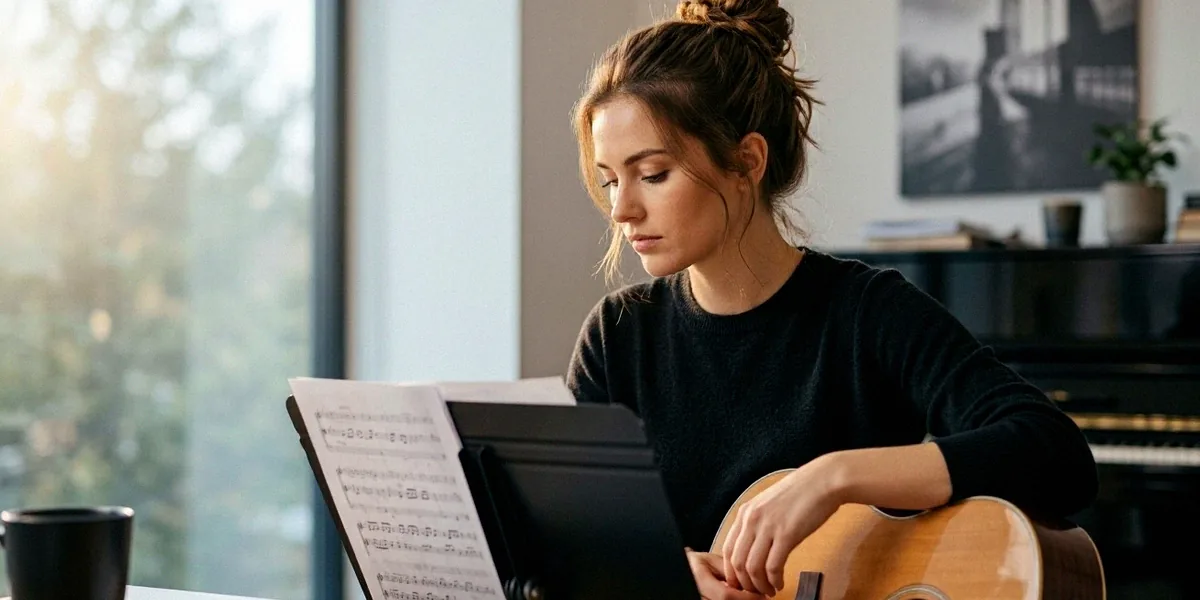
Musiikin lukiodiplomi: How We Prepare for the Performance Exam
There is a particular feeling that arrives when a student decides to take the Musiikin lukiodiplomi. It is part excitement, part terror — the sense that you are about to commit to something real, something judged, something that will sit on your record alongside your ylioppilaskirjoitukset. At Sibelius-lukio, we have watched hundreds of students move through this process, and we can tell you with confidence: the nerves never fully disappear, but careful preparation makes them manageable. The performance exam is not a trap. It is a chance to show what you can actually do, and the students who prepare well are the ones who walk out of the room smiling.
What the Musiikin lukiodiplomi Actually Requires
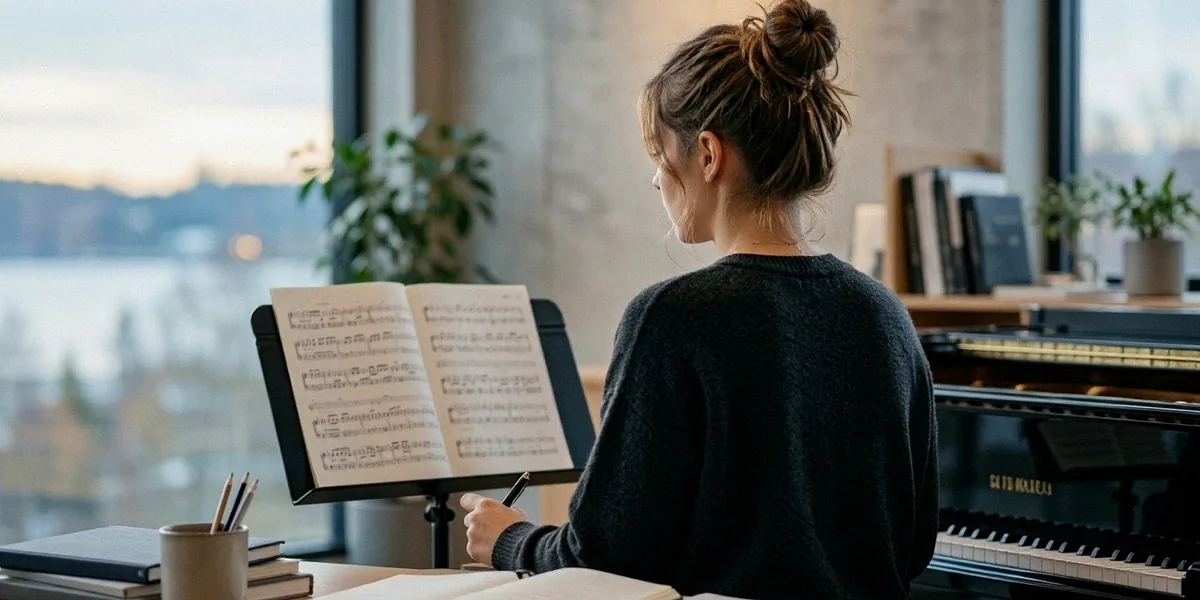
The Finnish music diploma is not a single test. It is a portfolio-style qualification that sits alongside the national matriculation exams, and it rewards sustained work rather than last-minute cramming. Students at Sibelius-lukio typically begin planning their diploma during the second year of upper secondary school, often in parallel with their regular musiikkilukio studies and, for some, their tanssilinja commitments.
The performance component explained
The performance component is the centrepiece. A candidate prepares a programme of roughly 20–30 minutes of music, usually across contrasting styles, and performs it for an examining panel. The panel includes an external examiner appointed according to guidelines from the Finnish Matriculation Examination Board, alongside the student’s own teacher. The repertoire is agreed in advance, and the student submits written materials explaining their artistic choices, rehearsal process and interpretation. This is not simply a recital — it is a demonstration of musicianship, reflection and discipline.
How the diploma connects to ylioppilaskirjoitukset
Many students ask whether the lukiodiplomi replaces anything in the ylioppilaskirjoitukset. It does not. The matriculation exams and the diploma are separate qualifications, but they can be completed in the same spring if a student manages their time carefully. At Sibelius-lukio we usually advise students to sit the diploma performance in the autumn of their final year, leaving the spring free for written matriculation subjects. This sequencing matters: it prevents the performance from competing directly with exam revision for the same weeks of the calendar.
Choosing Repertoire That Shows Your Strengths
Repertoire choice is where the diploma is quietly won or lost. A piece that is too easy will not demonstrate growth; a piece that is too hard will collapse under exam pressure. Our team works with each student to find the middle path.
Balancing difficulty and expression
We encourage students to think in terms of contrast rather than uniform difficulty. A typical balanced programme might include:
- One technically demanding piece that stretches your current ability
- One slower, lyrical work where tone and phrasing are the focus
- One piece from a different stylistic period or tradition
- Optional: a chamber or collaborative item, which suits many tanssilinja students who work regularly with accompanists and dancers
ABRSM graded music exams offer a useful reference point here. Even though ABRSM is a UK system, its grade structure gives students an external benchmark — a Grade 8 piece, for example, sits at a level many diplomas expect, while a post-Grade 8 work signals ambition. We do not require ABRSM qualifications, but we do use the grade descriptors as a shared vocabulary when discussing difficulty.
Working with your instrumental teacher
Your instrumental teacher knows your playing better than any examiner ever will. Bring three or four candidate pieces to your lesson and play them through, even roughly. Ask directly: which of these shows me at my best? Teachers will often spot that a student’s technique suits Baroque counterpoint better than Romantic bombast, or that a particular piece exposes a weakness in the upper register. Trust that judgement. The final programme should be agreed in writing at least four months before the exam.
Building a Practice Plan That Actually Works
Consistency beats intensity. A student who practises ninety focused minutes a day for four months will outperform a student who practises five hours a day for the final three weeks. We build every diploma plan around that principle.
Weekly rehearsal structure
A realistic weekly structure for a diploma candidate at Sibelius-lukio looks something like this:
- Four to five days of individual practice, 60–90 minutes each
- One full run-through of the programme, ideally in a performance space
- One lesson with your instrumental teacher
- One session with an accompanist, if your programme requires one
- One rest day — genuinely off, no instrument
Spaced repetition applies to music just as it does to language learning. Rather than drilling the same passage for an hour, revisit it briefly across several days. The brain consolidates motor patterns during sleep, so short daily contact is more effective than marathon sessions.
Recording and self-assessment
Record yourself every week, even on your phone. Listening back is uncomfortable at first, but it reveals things you cannot hear while playing: rushed transitions, uneven dynamics, moments where your attention drifts. Keep a simple log of each recording with one thing that improved and one thing to fix. Over four months, that log becomes a remarkable document of progress — and it doubles as useful material for the written reflection the diploma requires.
Mock Performances and Managing Nerves
You cannot eliminate performance anxiety, but you can familiarise yourself with it until it becomes a known quantity rather than a threat. The goal is not calmness; it is the ability to play well while your heart is racing.
Setting up mock auditions
From roughly six weeks before the exam, we arrange mock auditions. These are not casual run-throughs. We simulate the real conditions: a formal room, a seated panel, no stopping to restart, no comments until the end. Classmates from the musiikkilukio and tanssilinja programmes often attend as audience members, which adds a useful layer of social pressure. After each mock, the panel gives written feedback focused on stage presence, pacing and programme order — not just notes.
Techniques for performance anxiety
The Royal Academy of Music publishes freely available performance anxiety resources, including breathing exercises, pre-performance routines and cognitive reframing techniques. We recommend these to our students because they are practical rather than mystical. Three approaches work particularly well:
- Box breathing before you walk on stage — four counts in, four hold, four out, four hold
- A fixed pre-performance ritual, identical in practice and in the exam
- Reframing adrenaline as readiness rather than fear — the physical sensations are the same
We also remind students that examiners are musicians. They are not waiting for you to fail. They want to hear something genuine.
The Final Week: Logistics and Mental Preparation
The last seven days are not for learning new repertoire. They are for consolidation, logistics and rest. Students who try to cram in the final week usually arrive tired and over-caffeinated.
Checklist for the final week
- Confirm the exam time, venue and any instrument hire arrangements
- Check your instrument: reeds, strings, bows, valves, spare parts
- Plan your travel to the venue, including a buffer for delays
- Run the full programme twice, no more
- Read the Finnish Matriculation Examination Board’s current guidelines one final time
- Sleep eight hours a night — non-negotiable
Staying calm on the day
Eat a normal breakfast. Warm up properly but briefly. Avoid comparing yourself to other candidates in the waiting area — their preparation is not your business. When you walk in, take one slow breath before you begin. The first thirty seconds set the tone, so choose an opening piece you know intimately. Once you are playing, the nerves usually settle by the second page.
FAQ
Is the Musiikin lukiodiplomi compulsory at Sibelius-lukio?
No. It is optional, but a large proportion of our musiikkilukio students choose to take it because it strengthens applications to music academies and conservatoires. Tanssilinja students sometimes complete a related diploma in dance instead.
Can I take the lukiodiplomi in the same spring as my ylioppilaskirjoitukset?
It is possible, but we generally advise against it. Completing the performance in the autumn of your final year leaves the spring clear for written matriculation exams and reduces the risk of burnout.
Do I need ABRSM graded music exams to apply?
No. ABRSM grades are not required for the Finnish diploma. We reference them only as a shared way of describing difficulty levels when planning repertoire.
How long should my diploma programme be?
Most programmes run between 20 and 30 minutes of actual music. Your teacher and the examining panel will confirm the exact expectations well before the exam date.
What happens if I make a mistake during the performance?
You keep going. Examiners assess the whole performance, not individual slips. Recovery — staying musical after an error — is itself a skill they notice and value.
The Musiikin lukiodiplomi performance is demanding, but it is not cruel. With a well-chosen programme, a steady practice rhythm, honest mock auditions and a calm final week, it becomes what it should be: a milestone that marks how far you have come. At Sibelius-lukio, we have seen students walk into that room terrified and walk out transformed. Preparation is what makes the difference — and you do not have to do it alone.



Post Comment